Rug Guides
Sabra Rugs and Poufs: A Guide to Moroccan “Cactus Silk”
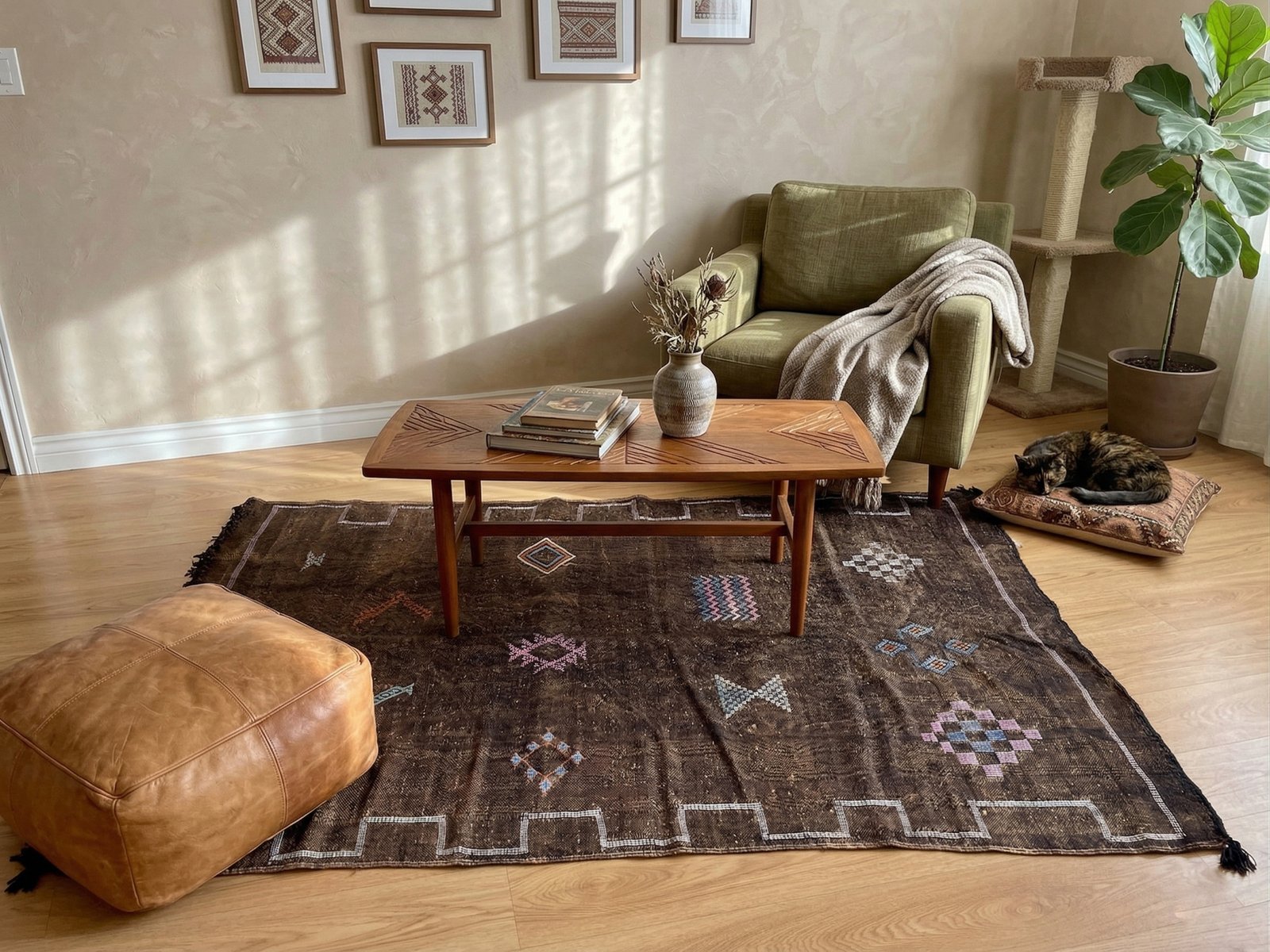
A sabra rug stands out the moment light touches it: the surface shines like silk, and its colour seems to change as you walk around it. In Morocco, the same silky yarn — known as sabra, or “cactus silk” — is woven into rugs, cushions and poufs. This guide explains what a sabra rug is made of, how it is woven, how to care for it, and why sabra poufs are such an easy way to bring colour into a room.
What is sabra, or “cactus silk”?
Sabra is the Moroccan name for a shiny yarn often sold as “cactus silk” or “vegan silk”. It has nothing to do with silkworms: the word “silk” describes its lustre, its fluid drape and its smooth feel under the hand.
Traditionally, sabra is associated with the fibres of the agave, a succulent that grows widely across Morocco. Agave is often called a cactus, but botanically it is not one — hence the popular, slightly inaccurate name “cactus silk”. To make the yarn, the long leaves are crushed and washed until only the pale fibres remain; the fibres are then spun, dyed and woven by hand.
Agave or viscose: what is a sabra rug made of today?
This is the honest part of the story. Hand-extracted agave fibre is slow and costly to produce, and much of the sabra yarn sold in Moroccan souks today is a plant-based cellulose fibre — viscose, also called rayon — made from wood pulp. It has the same sheen and the same soft feel, and it is still dyed and woven by hand by Moroccan artisans.
Both are plant-based, neither is real silk, and both make beautiful rugs. If the exact fibre matters to you, ask the seller: at MarrakechTribe we are always happy to tell you what we know about each piece.
How a sabra rug is made
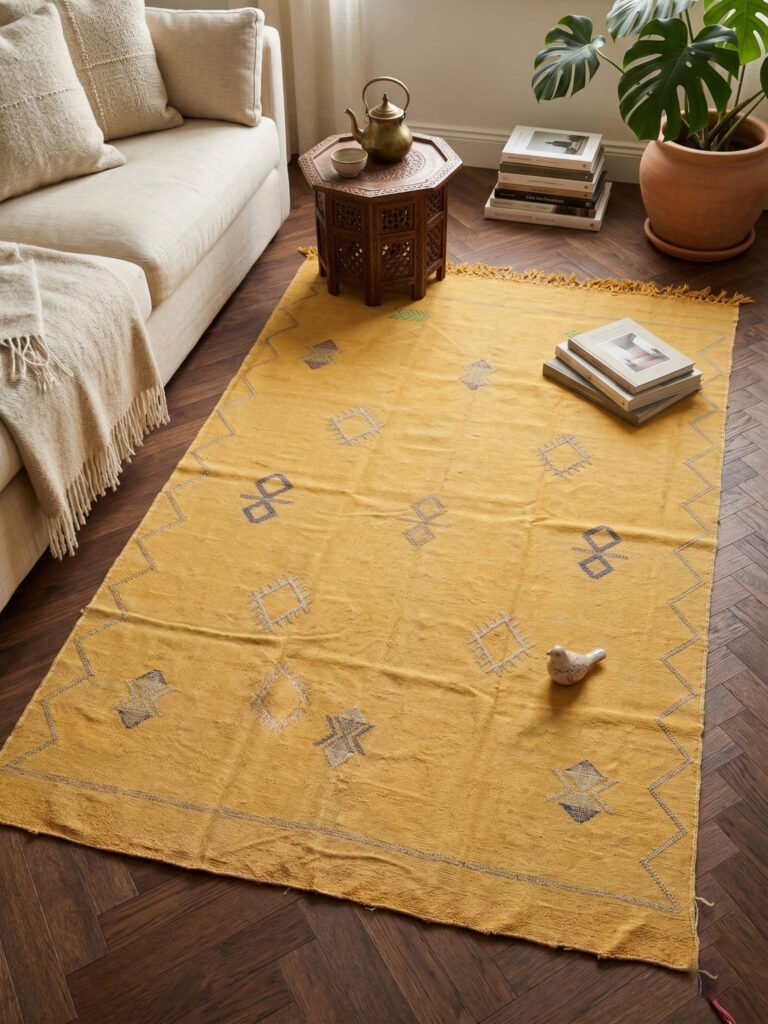
Sabra rugs are woven by hand, mostly in workshops around Fez and Marrakech. The yarn is dyed in skeins first, often in bold, saturated colours — saffron yellow, sky blue, chocolate brown, emerald or rose. The weaver then works it on a loom, line by line, sometimes adding geometric motifs or a contrasting border.
The result is a rug that feels very different from a thick wool Beni Ourain: smooth and cool to the touch, with a surface that reflects light. Because every sabra rug is made by hand, small variations in colour, tension and shape are normal — they are the mark of the artisan.
Sabra poufs: made from sabra weaving
A sabra pouf is a Moroccan floor cushion whose cover is made from sabra weaving — the same silky textile used for sabra rugs. The panels are sewn together into a square or round shape, then the pouf is filled at home.
Like most Moroccan poufs, sabra poufs are usually sold without filling. The cover travels flat, which keeps the parcel light, and you fill it with what you prefer:
- old blankets, towels or clothes, packed tightly in a bag;
- pieces of upholstery foam;
- polystyrene beads or wadding in an inner bag, for a lighter pouf.
Push the filling well into the corners and keep adding until the pouf is firm: a well-filled pouf keeps its shape and makes a comfortable seat, footrest or side table. Read our complete guide to filling a pouf or cushion cover.
The same silky weaving is also sewn into cushion covers — square, lumbar or long. See our ivory, pink, yellow, green and purple sabra cushions, or all our Moroccan pillows.
How to care for a sabra rug or pouf
- Vacuum gently, without the beater bar, or shake it outside.
- Avoid soaking it. Blot spills straight away with a dry cloth, then spot clean with a slightly damp cloth.
- Keep it out of strong direct sunlight to protect the colours.
- Turn it every few months so it wears evenly, and use a non-slip underlay.
- For a deep clean, trust a professional rug cleaner.
Where to use sabra in your home
A sabra rug is happiest in rooms with light to moderate foot traffic: a bedroom, a reading corner, in front of a sofa or at the foot of a bed. Its sheen looks especially beautiful in natural light, next to linen, wood and plants. A sabra pouf adds a spot of colour beside an armchair or in a child’s room.
For busy hallways and dining rooms, a flat-woven wool kilim — a hanbel — is the more hard-wearing choice. Compare all the styles in our guide to the types of Moroccan rugs, and check our rug size guide before you choose.
Our sabra rugs and poufs
- Yellow sabra rug — 152 × 96 cm
- Brown sabra rug — 140 × 97 cm
- Brown cactus silk rug — 137 × 93 cm
- Sky blue sabra rug — 147 × 95 cm
- Yellow sabra pouf — 50 × 50 × 30 cm, sold without filling
Prefer wool? See our Beni Ourain pouf, our brown, burgundy and grey striped wool poufs, or browse all our Moroccan poufs and handmade rugs.
Frequently asked questions
Is a sabra rug real silk?
No. “Silk” describes the sheen and feel of the yarn. Sabra is a plant-based fibre, not a silkworm fibre.
Is cactus silk really made from cactus?
Traditionally, sabra is linked to agave fibre — and agave is a succulent, not a true cactus. Much modern sabra yarn is viscose, a cellulose fibre made from wood pulp.
Can I wash a sabra rug?
Avoid soaking it or putting it in a washing machine. Blot spills quickly, spot clean with a damp cloth and use a professional cleaner for a deep clean.
Why are sabra poufs sold without filling?
So the cover can travel flat and light. You fill it at home with old textiles, foam or beads, as firm as you like.
Is a sabra rug good for a hallway?
It is better suited to calmer rooms. For a hallway, choose a flat-woven wool kilim or a runner.
Keep reading
More from the Journal
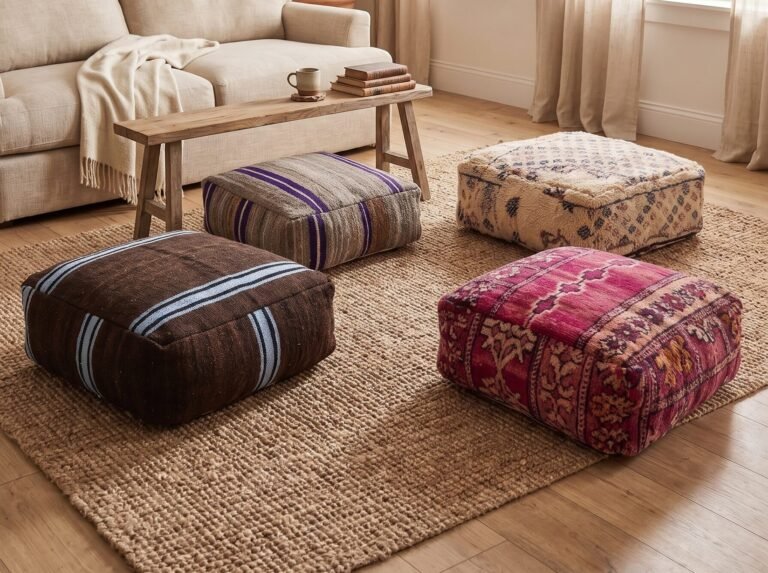
How to Fill a Pouf or Cushion Cover: Inserts, Fillings and Easy Tips
Our poufs and cushion covers are sold unfilled. How to choose the right insert size, which filling to use — fiberfill, feathers,…
Read the article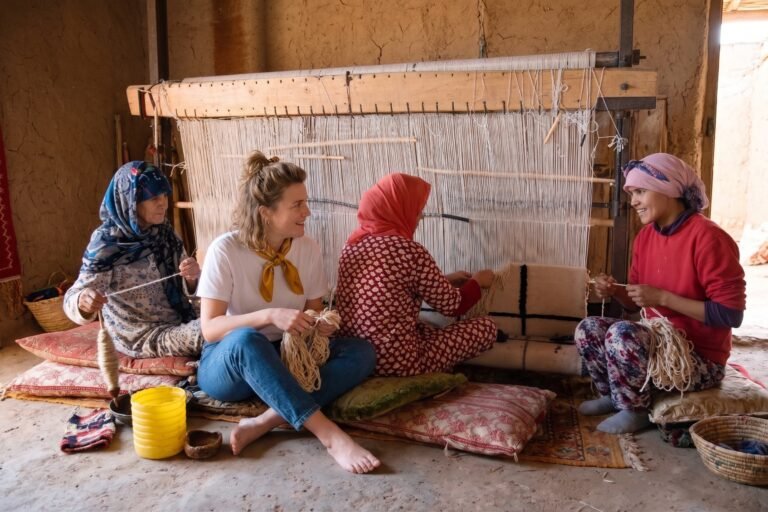
Taznakht Rugs & the Women Who Weave Them
In the mountains of southern Morocco, Amazigh women have woven rugs for generations. Discover how a Taznakht rug is made, what makes…
Read the article
How to Tell If a Moroccan Rug Is Authentic: 8 Simple Checks
Machine-made copies are everywhere. Here are eight easy checks to recognise a genuine handmade Moroccan rug — in a shop or online.
Read the article