
Buying Guide
How to Fill a Pouf or Cushion Cover: Inserts, Fillings and Easy Tips
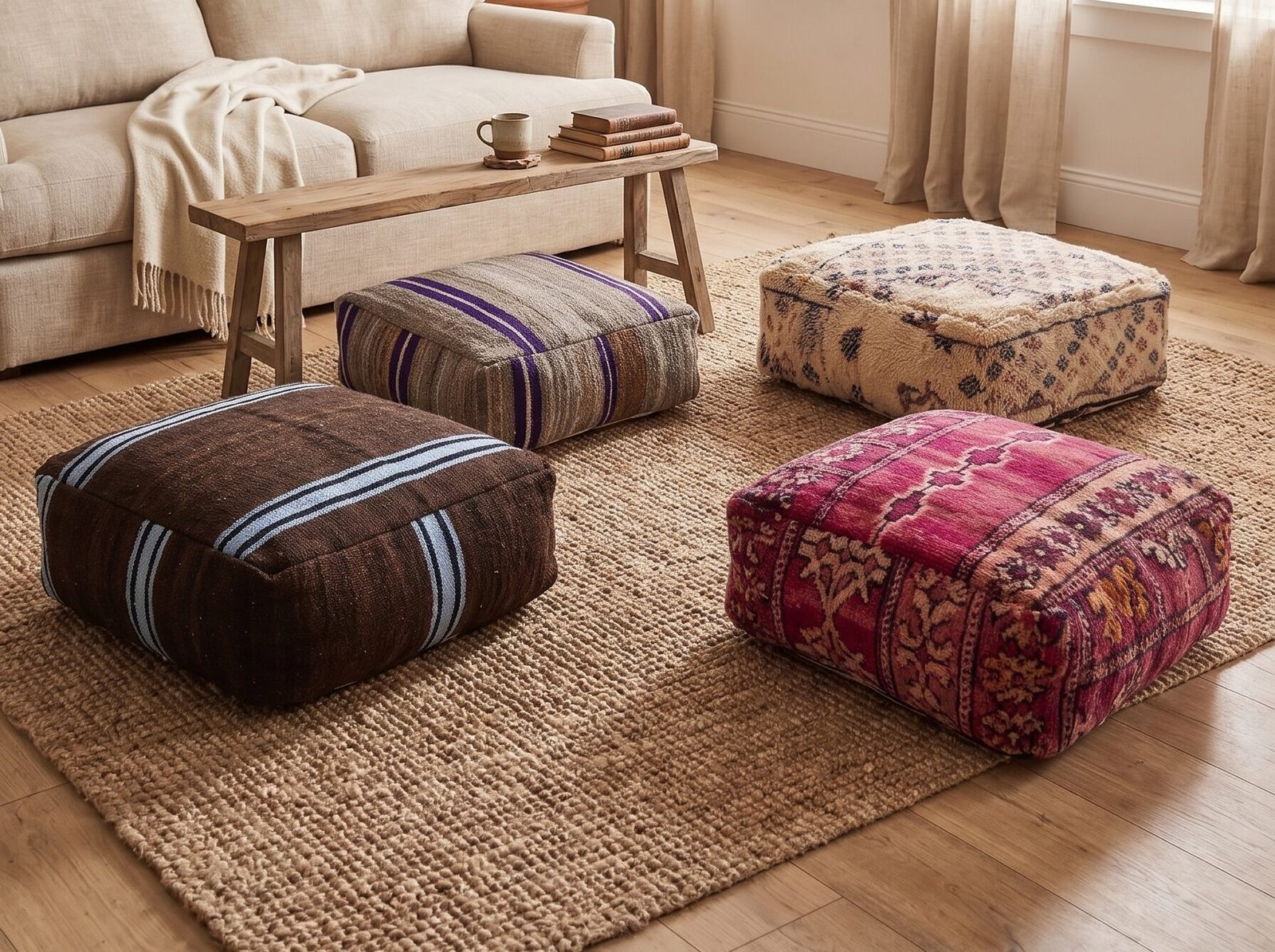
Our Moroccan poufs and cushion covers are sold without filling. It is the traditional way they travel — flat, light and easy to ship — and it lets you decide how soft or firm you want them. This guide explains how to fill a pouf, how to choose the right insert for a cushion cover, and which filling to pick, from polyester fiberfill to feathers, foam or the old blankets already in your cupboard.
Why are Moroccan poufs and cushions sold unfilled?
- Lighter, greener shipping: an empty cover folds flat, so the parcel is small and light.
- Your choice of comfort: soft and squashy, or firm enough to sit on — you decide.
- A second life for old textiles: a pouf is the perfect place for blankets, towels and clothes you no longer use.
- Easy to move house: empty it, fold it, fill it again in your new home.
How to fill a cushion cover
1. Choose the right insert size
The golden rule: choose an insert (also called a cushion pad or inner) that is the same size as the cover, or slightly larger — about 5 cm. A slightly bigger insert fills the corners and gives a plump, generous look. An insert that is too small leaves empty, flat corners.
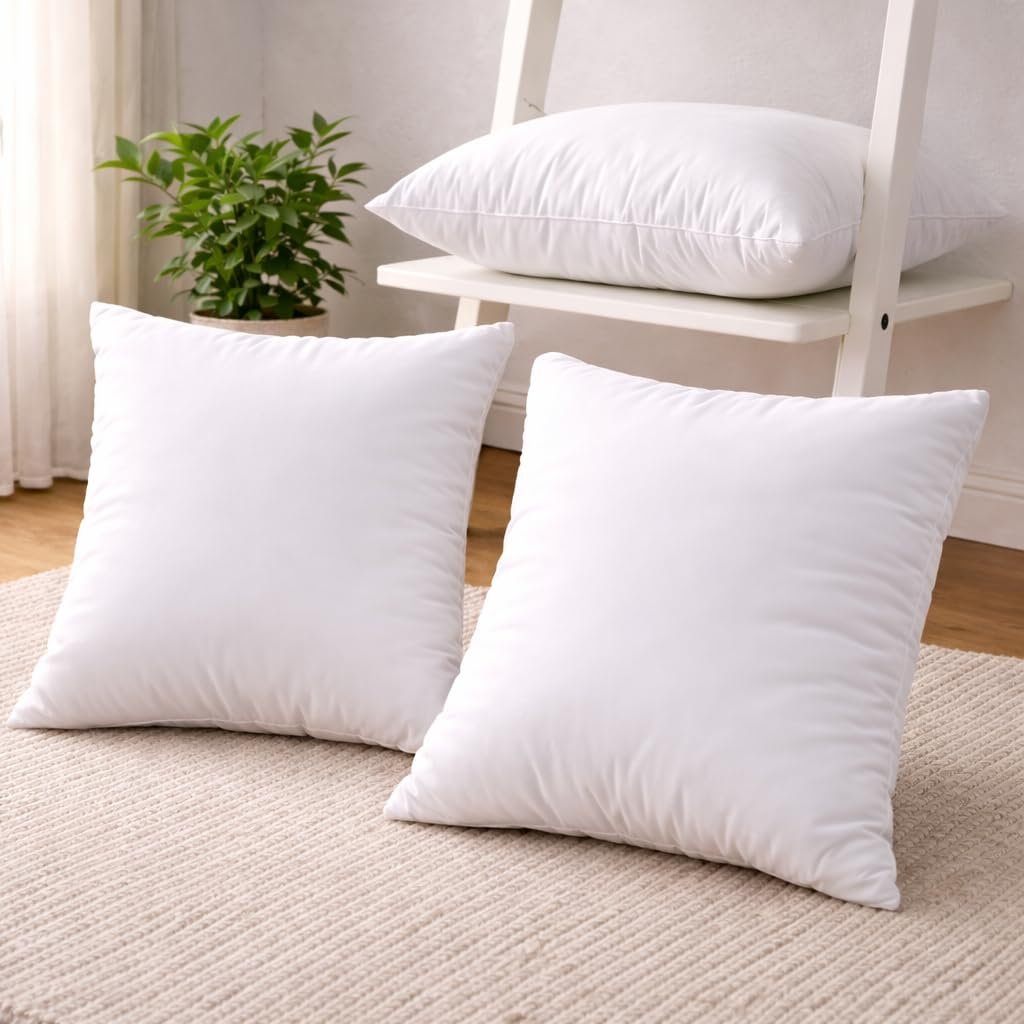
To measure a cover, lay it flat and measure from seam to seam. For our cushion covers:
| Cover size | Recommended insert |
|---|---|
| 45 × 45 cm | 45 × 45 cm, or 50 × 50 cm for a plumper look |
| 50 × 45 cm and 52 × 45 cm | 50 × 50 cm |
| 52 × 40 cm and 54 × 40 cm | 40 × 60 cm |
| 50 × 35 cm and 52 × 32 cm (lumbar) | 30 × 50 cm, or 35 × 55 cm for a fuller look |
| 90 × 50 cm (long cushion) | 50 × 90 cm, or a cotton inner filled with fiberfill |
2. Choose your filling
- Feather or down: soft, plump and luxurious; holds its shape well with regular fluffing. Not ideal if you are allergic to feathers.
- Polyester fiberfill (hollow fibre): light, affordable, hypoallergenic and often machine-washable. It can flatten a little over time — fluff it regularly.
- Foam (shredded or memory foam): firm and supportive, keeps its shape; good for floor cushions you sit on.
- Kapok or wool: natural fillings; kapok is very light and airy, wool is firm and breathable.
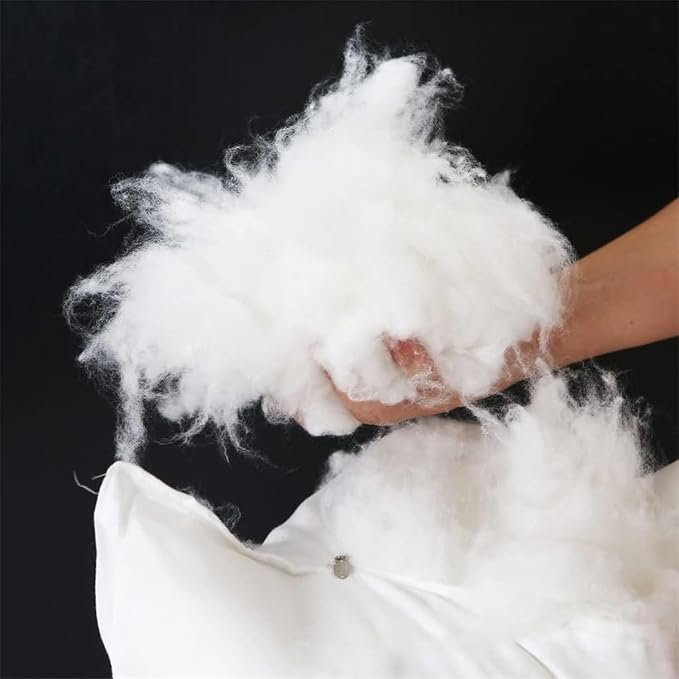
3. Put the insert in
- Fold the insert in half, like a taco, and slide it into the cover.
- Push each corner of the insert right into the corners of the cover.
- Smooth the cover and close it.
- Shake and plump the cushion so the filling spreads evenly.
How to fill a Moroccan pouf
A 50 × 50 × 30 cm pouf holds about 75 litres — more filling than most people expect. Fillings compress, so plan to pack it tightly.
What you need
- An inner bag: an old duvet cover, a pillowcase or a large bag. It keeps the filling together, makes the pouf easy to empty and stops loose filling showing through fine covers like sabra.
- Filling of your choice (see below).
Which filling for a pouf?
- Old textiles (blankets, towels, clothes): free, sustainable and firm — the traditional way. Fold them flat rather than bunching them.
- Polyester fiberfill: light and soft; best for a pouf used as a footrest. Combine it with textiles or foam for a firmer seat.
- Foam: shredded foam, or a foam block cut to size, gives the firmest result — ideal if the pouf will be used as a seat.
- Polystyrene beads: very light, with a beanbag feel. Always put them in an inner bag, and fill outdoors or in the bath to avoid a mess.
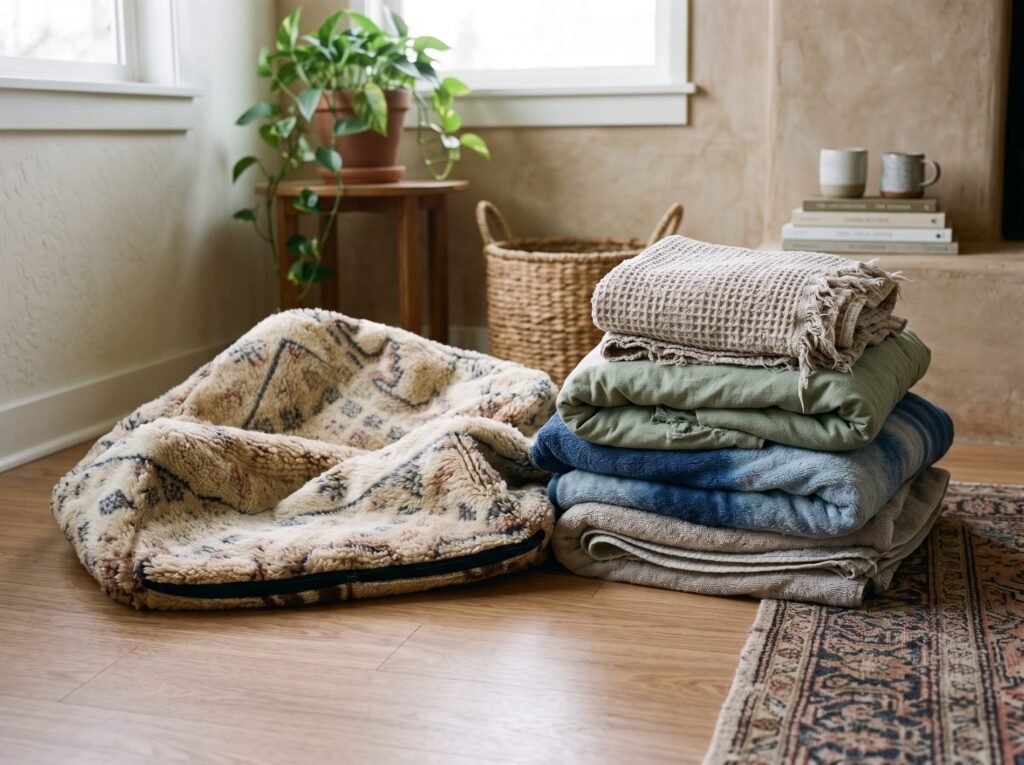
Our tip: build a firm core of folded textiles or foam, then fill the gaps and corners with fiberfill for a smooth, rounded shape.
Step by step
- Open the pouf and slide the empty inner bag inside.
- Start with the corners and the base: they are the first to look empty.
- Add the filling in layers, pressing down firmly after each one.
- Keep going until the pouf is fuller than you think it should be — then sit on it and add a little more.
- Close the inner bag, then close the pouf.
- Shape it: press the sides and top with your hands until it stands straight.
Keep your pouf and cushions looking good
- Plump cushions every few days, and top up a pouf from time to time — fillings settle with use.
- Turn the pouf over now and then so it wears evenly.
- Keep sabra and wool covers out of strong direct sunlight to protect the colours.
- Blot spills straight away with a dry cloth; spot clean the cover rather than soaking it.
Want to know more about the textiles themselves? Read our guide to sabra rugs and poufs and our guide to the types of Moroccan rugs.
Our unfilled poufs and cushions
Poufs (50 × 50 × 30 cm): yellow sabra pouf, Beni Ourain pouf, brown wool pouf, grey wool pouf with purple stripes and burgundy wool pouf.
Square and rectangular cushions: ivory sabra pillow, white ivory sabra cushion, pink sabra cushion, green sabra cushions (45 × 45 cm); yellow sabra pillows (50 × 45 cm); black sabra pillow and brown sabra pillows (52 × 45 cm); blue sabra pillow (52 × 40 cm); pink and black cactus silk pillows (54 × 40 cm).
Lumbar cushions: handira pillow (50 × 35 cm), handira lumbar cushion, white sabra lumbar pillow and grey sabra lumbar pillow (52 × 32 cm).
Long cushions (90 × 50 cm): ivory, green, grey and purple sabra cushions.
Browse all our Moroccan poufs and pillows.
Frequently asked questions
Why are your poufs and cushions sold without filling?
So they travel flat and light, and so you can choose the filling and firmness you prefer.
What is the best filling for a pouf?
For a pouf you sit on, a firm core of foam or folded textiles topped with fiberfill. For a footrest, fiberfill alone is enough.
What size insert do I need for a 45 × 45 cm cushion cover?
A 45 × 45 cm insert fits; a 50 × 50 cm insert gives a fuller, plumper cushion.
Can I fill a pouf with polystyrene beads?
Yes — always inside an inner bag, so the beads do not escape and the pouf is easy to empty.
How much filling does a pouf need?
More than you expect: a 50 × 50 × 30 cm pouf holds about 75 litres. Pack it tightly and top it up as it settles.
Keep reading
More from the Journal
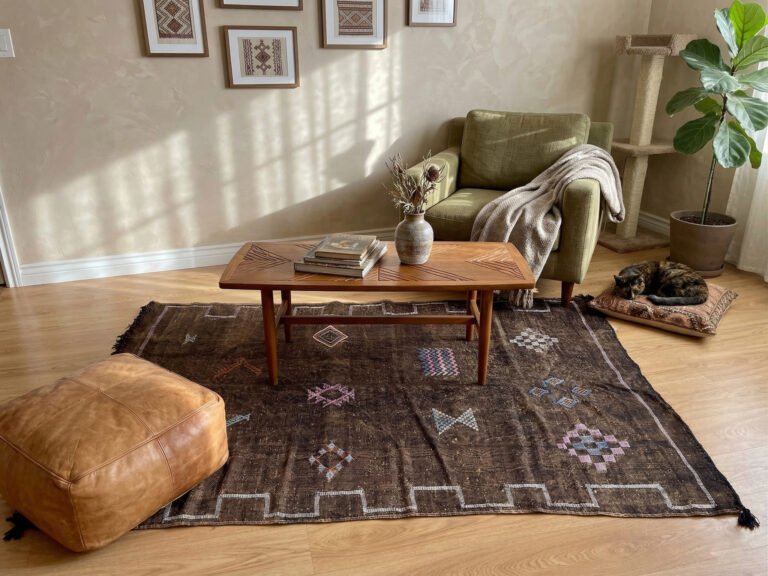
Sabra Rugs and Poufs: A Guide to Moroccan “Cactus Silk”
What is a sabra rug really made of — agave or viscose? How sabra rugs and poufs are woven, how to fill…
Read the article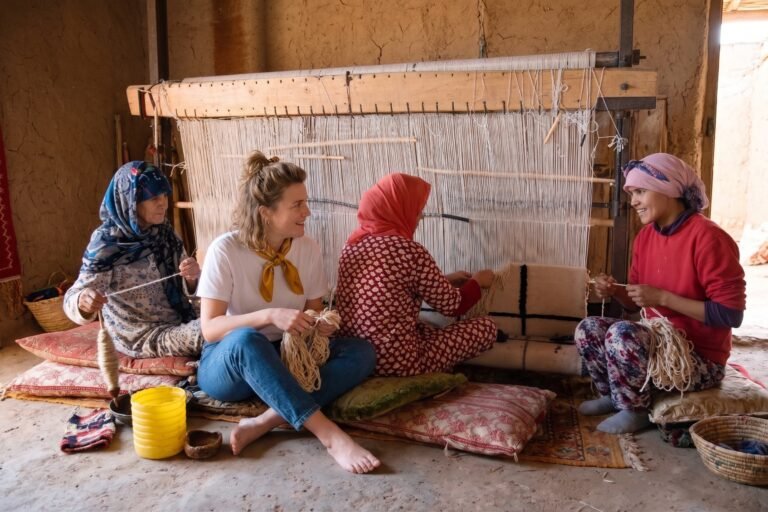
Taznakht Rugs & the Women Who Weave Them
In the mountains of southern Morocco, Amazigh women have woven rugs for generations. Discover how a Taznakht rug is made, what makes…
Read the article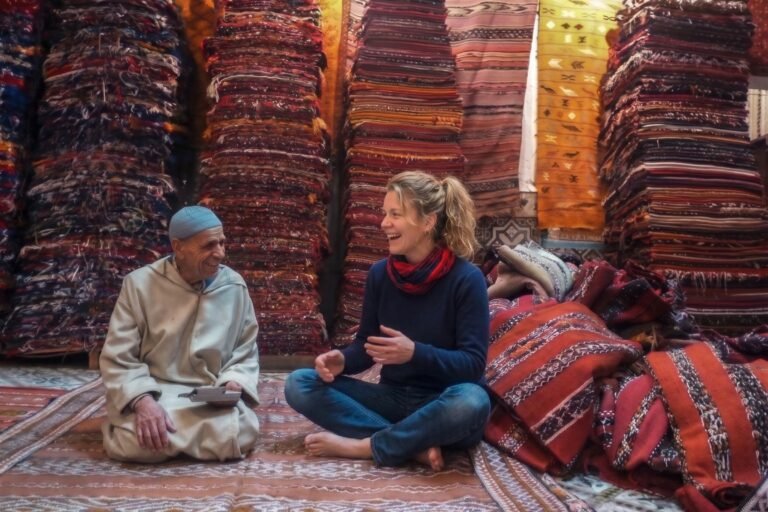
How to Tell If a Moroccan Rug Is Authentic: 8 Simple Checks
Machine-made copies are everywhere. Here are eight easy checks to recognise a genuine handmade Moroccan rug — in a shop or online.
Read the article