Rug Guides
Types of Moroccan Rugs: A Guide to Beni Ourain, Azilal, Boucherouite, Taznakht & More
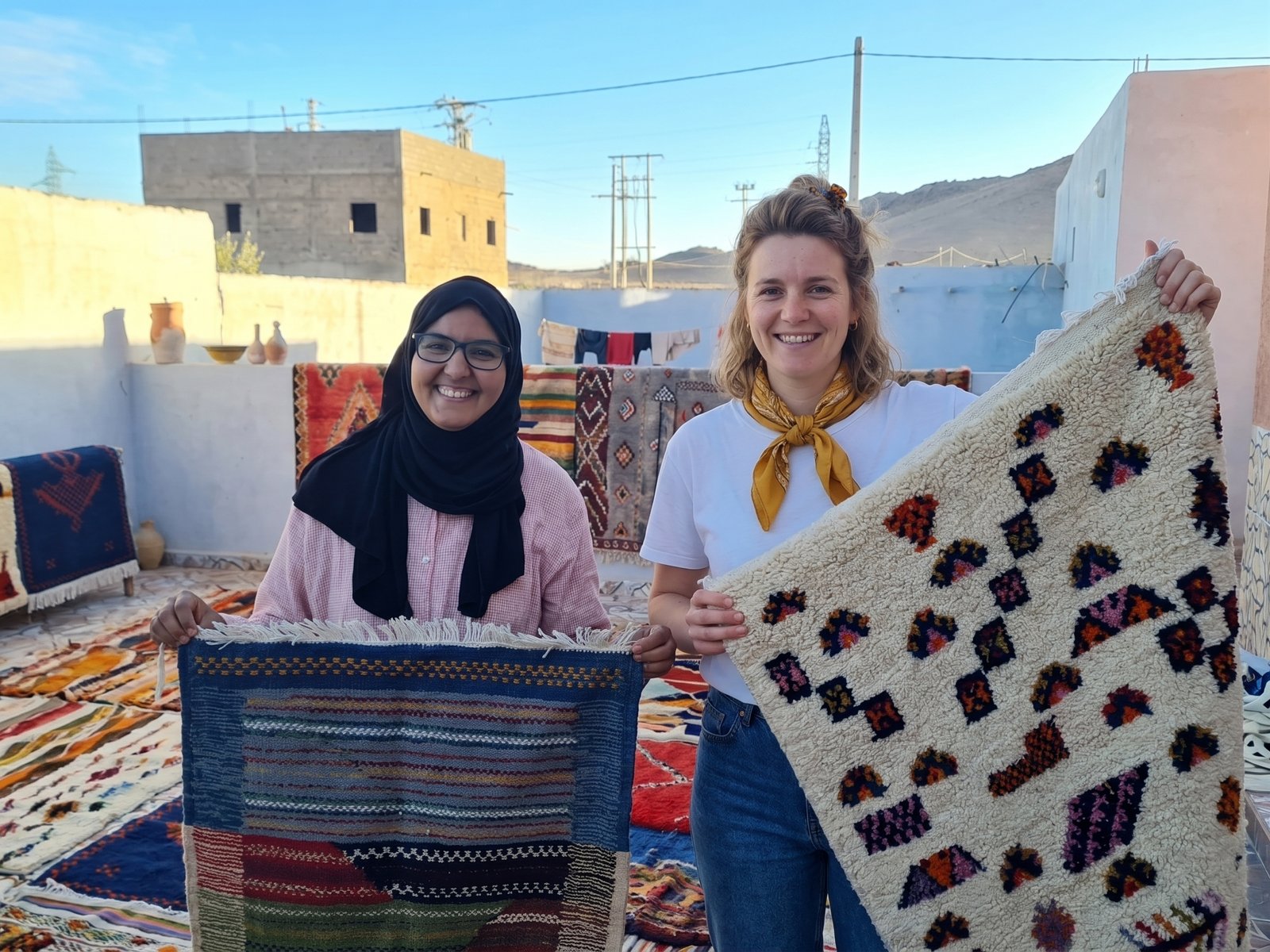
Every region of Morocco has its own way of weaving Berber carpets. The climate, the local sheep, the plants used for dyes and the history of each community shape what its rugs look like. Here is a simple guide to the main types of Moroccan rugs — and how to choose the right one for your home.
The main types of Moroccan rugs at a glance
| Style | Region | Technique | Look |
|---|---|---|---|
| Beni Ourain | Middle Atlas | Hand-knotted, thick pile | Cream with dark lines |
| Azilal | Central High Atlas | Hand-knotted, medium pile | Ivory ground, colourful symbols |
| Boucherouite | Across Morocco | Knotted from fabric scraps | Bright, playful, multicolour |
| Boujad | Central plains | Hand-knotted | Pinks, reds and oranges |
| Taznakht | Siroua (south) | Mixed: flat-woven and raised | Textured, geometric, colourful |
| Zanafi | Southern High Atlas | Mostly flat-woven, stripes | Bold horizontal bands |
| Kilim / hanbel | Across Morocco | Flat-woven, no pile | Light, graphic, durable |
Beni Ourain rugs
Beni Ourain rugs come from a group of tribes in the Middle Atlas mountains, where winters are cold. They are thick, soft, hand-knotted rugs made from undyed sheep’s wool: a cream or ivory ground crossed by dark lines, diamonds and zigzags, traditionally drawn with the wool of black sheep.
In the 20th century, Beni Ourain rugs found their way into the homes of modernist architects and designers such as Alvar Aalto and Le Corbusier, and they remain a favourite in Scandinavian and minimalist interiors. Our Beni Ourain rug reverses the classic palette: black wool with white lines.
Azilal rugs
Azilal rugs come from the province of Azilal in the central High Atlas. They are hand-knotted with a medium pile on an ivory or cream wool ground, decorated with colourful, free-hand symbols: diamonds, zigzags, crosses, hands and stylised figures. Each Azilal rug is composed by the weaver as she goes, without a drawing, which makes every piece one of a kind. They are perfect if you want a joyful, artistic statement on the floor.
Boucherouite rugs
Boucherouite (from the Moroccan Arabic for “torn, reused clothing”) are rag rugs made from strips of recycled fabric — old clothes, sheets and textiles — knotted onto a base. They appeared as wool became harder to get for families who had moved away from herding, and they turned scarcity into creativity. Boucherouite rugs are bright, playful and often surprisingly soft, and they are easy to wash.
Boujad rugs
Boujad rugs come from the central plains around the town of Boujad. They are hand-knotted in warm pinks, reds and oranges, often with geometric shapes that seem to float across the rug. Vintage Boujad rugs have faded into soft pastel tones that are very popular today.
Taznakht rugs
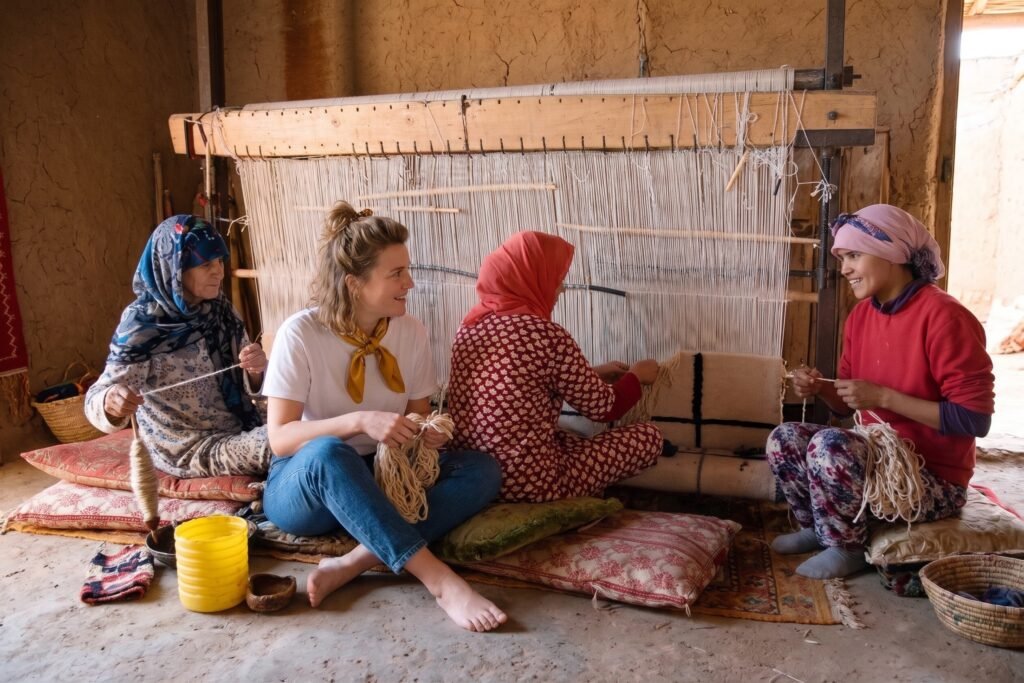
Taznakht rugs come from the Siroua region of southern Morocco, between the High Atlas and the Anti-Atlas, and are associated with the Aït Ouaouzguite tribes. Weavers here often mix flat weaving with knotted or raised areas, which gives the rugs a textured, almost sculptural surface, decorated with diamonds, triangles and small symbols. Rugs from this area are sometimes sold as “Glaoui” rugs. Our Akhnif rug was handwoven by a women’s cooperative in Taznakht — read more about the women weavers of Taznakht.
Zanafi rugs
Zanafi rugs come from the southern slopes of the High Atlas, around Ouarzazate and the Taznakht valley. They are recognisable by their horizontal stripes of different widths, sometimes decorated with small diamonds or zigzags. Zanafi rugs are mostly flat-woven, and some include raised bands of knotted pile between the stripes. They are light, durable and easy to clean — see our Zanafi rug in grey and black.
Kilims and hanbels (flat-woven rugs)
Kilims — called hanbel in Morocco — are flat-woven rugs with no pile. They are thin, light and very durable, which made them ideal for nomadic families who needed rugs they could roll up and carry. Today they are perfect for hallways, dining rooms and anywhere with heavy foot traffic.
Understanding Amazigh symbols
Across all types of Moroccan rugs, you will find symbols that belong to a visual language thousands of years old. Meanings vary from one tribe — and one weaver — to another, but some motifs are often read this way:
- Diamond (lozenge): the eye, protection, femininity and fertility.
- Zigzag: water, or a winding path.
- Triangle: mountains, or protection.
- Cross: the four directions, balance.
- Hand (khamsa): protection against the evil eye.
Be wary of anyone who gives every symbol one fixed meaning: these are personal, living designs, not a dictionary.
Which Moroccan rug is right for your home?
Each of the types of Moroccan rugs above suits a different room and mood:
- For a calm, minimalist room: a Beni Ourain or a neutral Zanafi.
- For colour and personality: an Azilal, a Boujad or a Boucherouite.
- For a hallway, kitchen or dining room: a kilim or a flat-woven Zanafi.
- For texture and a story: a Taznakht or Akhnif rug.
Not sure about the size? Read our rug size guide, and learn how to tell if a Moroccan rug is authentic before you buy. Then browse our handmade Moroccan rugs.
Frequently asked questions
How many types of Moroccan rugs are there?
There are dozens of regional styles — almost every tribe has its own. The seven types of Moroccan rugs in this guide are the ones you are most likely to find.
What is the most popular type of Moroccan rug?
Beni Ourain rugs are the best known outside Morocco, thanks to their neutral palette and thick, soft pile.
Which Moroccan rug is easiest to clean?
Flat-woven rugs such as kilims and Zanafi rugs are the easiest: they shed very little and can be vacuumed on both sides.
What is the difference between Azilal and Boucherouite?
Azilal rugs are hand-knotted from wool on an ivory ground; Boucherouite rugs are made from recycled fabric strips and are usually more multicoloured.
Keep reading
More from the Journal
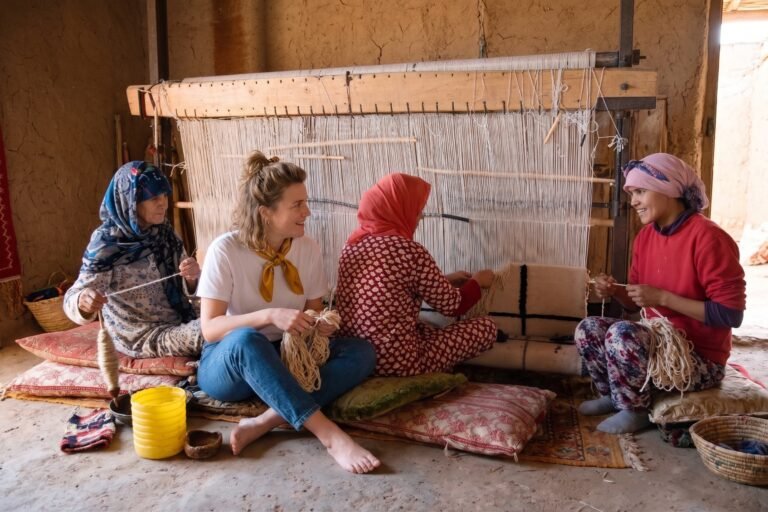
Taznakht Rugs & the Women Who Weave Them
In the mountains of southern Morocco, Amazigh women have woven rugs for generations. Discover how a Taznakht rug is made, what makes…
Read the article
How to Tell If a Moroccan Rug Is Authentic: 8 Simple Checks
Machine-made copies are everywhere. Here are eight easy checks to recognise a genuine handmade Moroccan rug — in a shop or online.
Read the article
What Size Rug Do You Need? A Room-by-Room Guide (+ How Delivery Works)
Living room, bedroom, dining room or hallway: simple rules to choose the right rug size — plus what to expect when your…
Read the article