Our Makers
Taznakht Rugs & the Women Who Weave Them
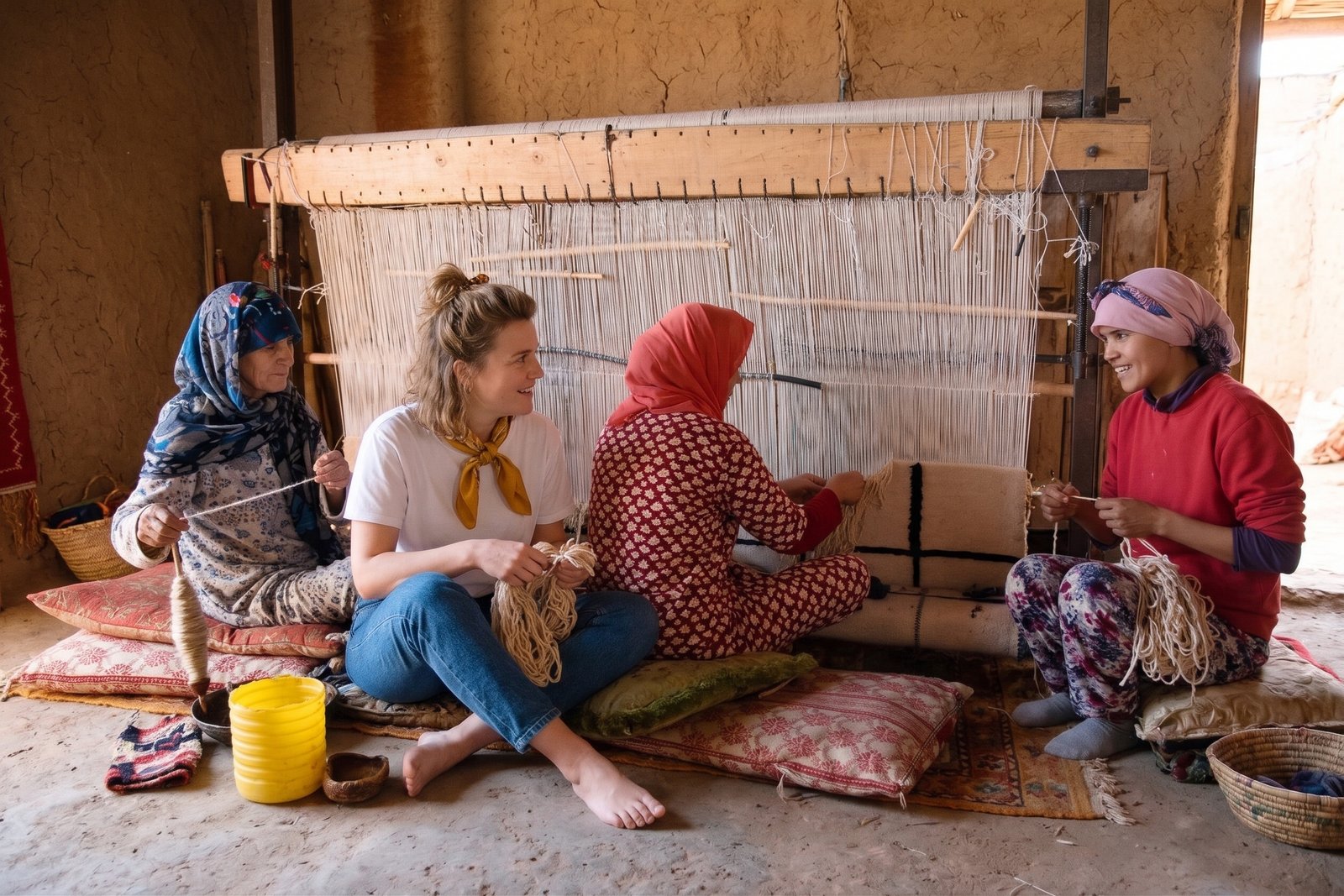
Taznakht rugs come from a small market town in the mountains of southern Morocco, where Amazigh women have woven wool on vertical looms for generations. Several pieces in our collection were made by a women’s cooperative here. This is the story of the town, the craft and the women behind it.
Where is Taznakht?
Taznakht sits in the Siroua region of southern Morocco, where the High Atlas meets the Anti-Atlas, about a two-hour drive from Ouarzazate. It is a place of dry valleys, stone villages and sheep — and for a long time it has been the weekly market where weavers from the surrounding villages came to sell their work.
The rugs of this area are closely associated with the Aït Ouaouzguite tribes. Because the region was once under the authority of the Glaoui family, you will sometimes see these rugs sold as “Glaoui” rugs in shops and markets.
A craft passed from mother to daughter
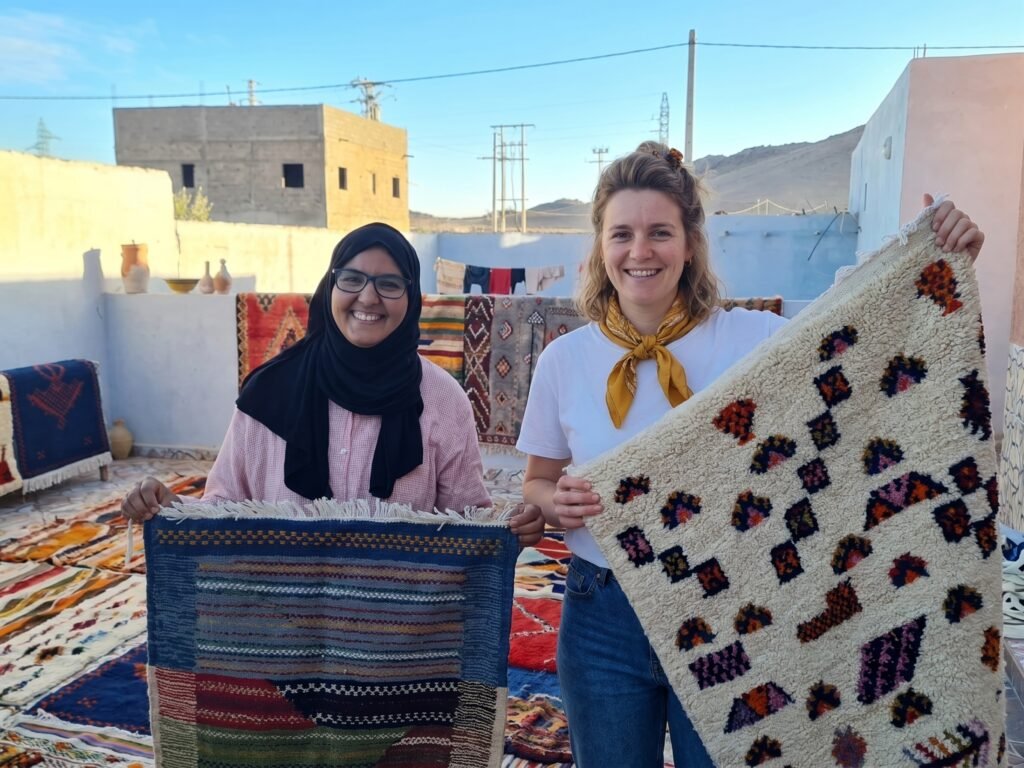
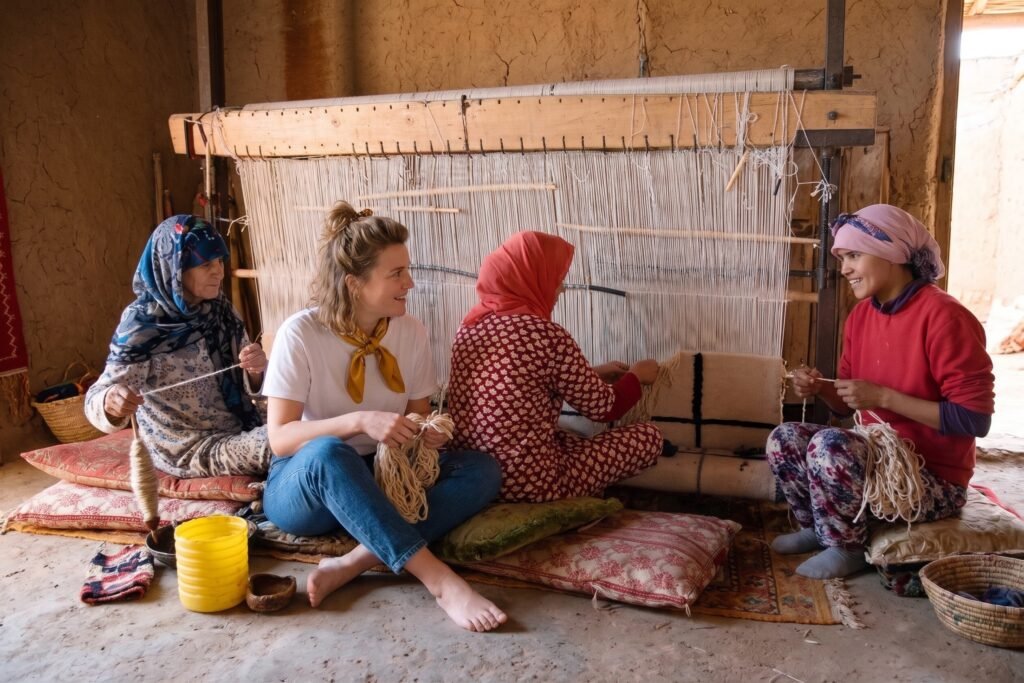
Weaving in Taznakht has never been taught in schools. It is passed down at home, from mother to daughter: girls watch, help prepare the wool, and then start weaving small pieces themselves, often from a young age. Many women in the region still weave alongside their other work, and a single family can have several generations sitting at the same loom.
The tradition is also fragile. An AFP report from 2024 described how many young women now prefer better-paid jobs, and how industrial dyes have largely replaced the natural pigments that once made the region famous. Supporting the women who still weave is one of the reasons we work with cooperatives.
From fleece to floor: how a Taznakht rug is made
Every rug goes through the same long chain of handwork before it reaches your home:
1. Shearing and washing the wool
The wool comes from local mountain sheep. It is washed in cold water to remove dirt while keeping some of its natural lanolin, which gives Moroccan wool its soft, slightly waxy feel.
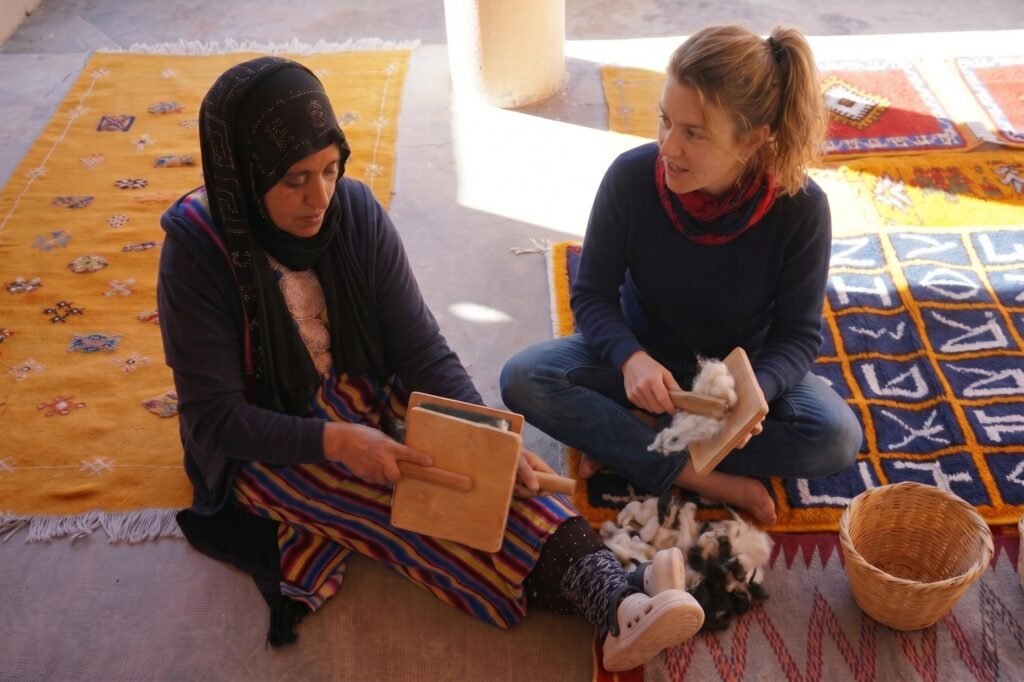
2. Carding and spinning
The clean wool is combed (carded) to untangle the fibres and then spun by hand into yarn. Hand-spun yarn is never perfectly even — and those small variations are part of what makes a handmade rug look alive.
3. Dyeing
Traditionally, colours came from plants and minerals such as madder, henna, saffron and indigo. Today most weavers use modern dyes, which are cheaper and more consistent. Both are found in authentic rugs — what matters is that the seller tells you honestly which one was used.
4. Weaving on the loom
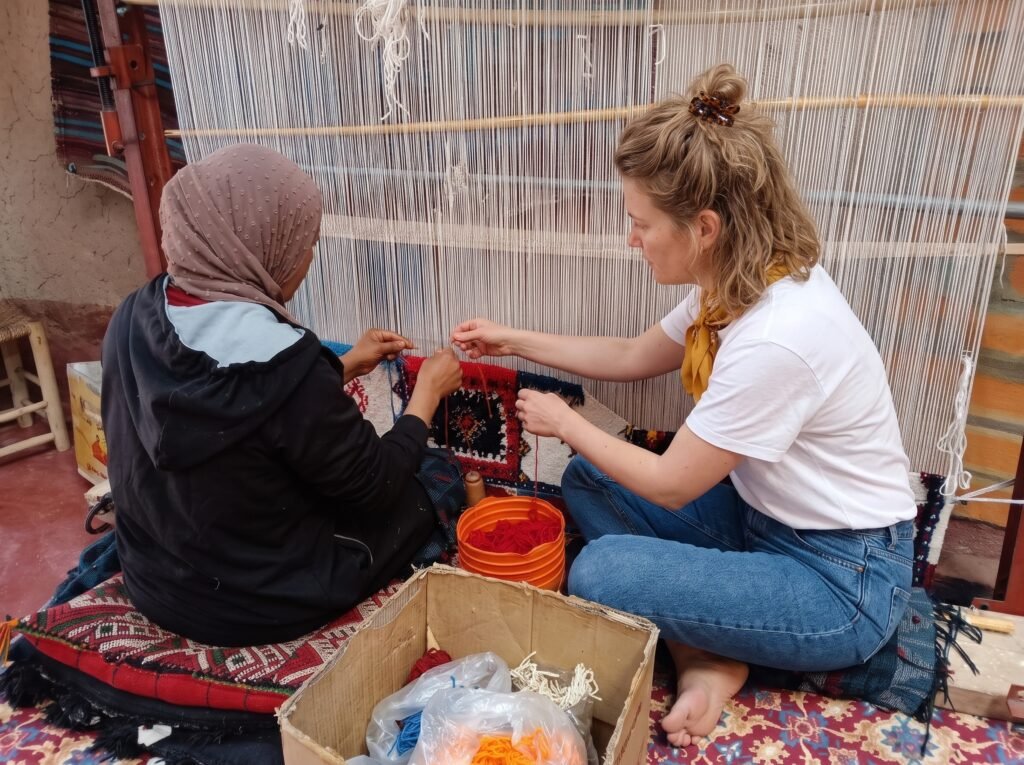
The warp threads are stretched vertically on a wooden loom. The weaver then builds the rug row by row, alternating flat-woven passes with knots or raised details. The pattern is not drawn in advance: it lives in the weaver’s memory and hands. Depending on its size and complexity, a rug takes about two to four weeks to weave — our Akhnif rug took around two weeks.
5. Finishing
Once the rug comes off the loom, the warp ends become the fringe, loose threads are trimmed and the rug is washed and dried in the sun.
What makes Taznakht rugs recognisable?
- A mix of techniques: many Taznakht rugs combine flat weaving with knotted or raised areas, giving them a textured, almost three-dimensional surface.
- Geometric motifs: diamonds, triangles, zigzags and small symbols, often arranged in bands or repeated across the rug.
- Colour: from vivid reds, oranges and saffron yellows to calmer greys and naturals, as in our Akhnif rug.
- The akhnif heritage: the region is also known for the akhnif, a thick wool cape traditionally woven by Aït Ouaouzguite women, famous for its eye-shaped motif believed to protect against the evil eye (Smarthistory). Today, “Akhnif” rugs carry this heritage onto the floor.
Why buying from cooperatives matters
For a long time, most weavers sold their rugs to middlemen for a few hundred dirhams, while the same rugs could sell for many times more in city bazaars or online. Women’s cooperatives change this: they let weavers organise together, sell more directly, set fairer prices and keep a larger share of the value they create.
That is why we buy from women’s cooperatives. When you choose one of our rugs, more of what you pay goes to the women who made it — and you help keep a centuries-old craft alive in the villages where it was born.
Our pieces from Taznakht and beyond
- Akhnif rug — handwoven by a women’s cooperative in Taznakht, grey wool with small Amazigh motifs.
- Zanafi rug — woven by a women’s cooperative in the Ouarzazate region, a short drive from Taznakht.
- Beni Ourain rug — hand-knotted by Berber women in Khenifra, in the Middle Atlas.
Want to understand the differences between these styles? Read our guide to Moroccan rug styles.
Frequently asked questions
Are Taznakht rugs hand-knotted or flat-woven?
Often both. Many Taznakht rugs mix flat-woven areas with knotted or raised details, which gives them their textured look.
How long does it take to weave a Taznakht rug?
Usually between two and four weeks, depending on the size and the complexity of the design.
Are Taznakht rugs made with natural dyes?
Traditionally yes, but today most weavers use modern dyes. We always tell you what we know about each piece.
Where can I buy an authentic Taznakht rug?
Buy from a seller who can tell you who made the rug, where and how. Our handmade Moroccan rugs come from women’s cooperatives, and every listing tells you where it was made.
Keep reading
More from the Journal
How to Tell If a Moroccan Rug Is Authentic: 8 Simple Checks
Machine-made copies are everywhere. Here are eight easy checks to recognise a genuine handmade Moroccan rug — in a shop or online.
Read the article
Types of Moroccan Rugs: A Guide to Beni Ourain, Azilal, Boucherouite, Taznakht & More
Beni Ourain, Azilal, Boucherouite, Taznakht, Zanafi, kilim… A clear guide to the main types of Moroccan rugs, where they come from and…
Read the article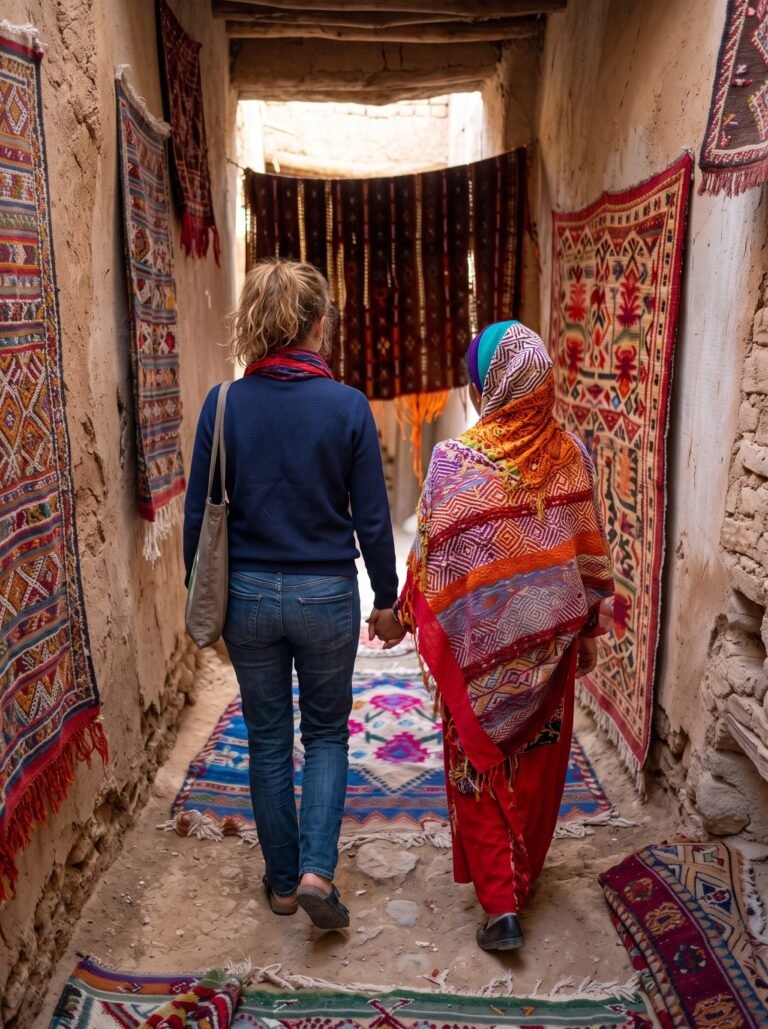
What Size Rug Do You Need? A Room-by-Room Guide (+ How Delivery Works)
Living room, bedroom, dining room or hallway: simple rules to choose the right rug size — plus what to expect when your…
Read the article